Typical ranges from public sources, not quotes. Where these numbers come from
Straight answers about saving an older Model S or Model X, and about shipping your Tesla to our Midwest shop.
Call Get a free quote How shipping worksOften, yes. When a 2012–2018 Model S or X needs a battery pack or rear drive unit, a dealer quote for a whole new assembly can be more than the car is worth, so a lot of these cars get sold for parts. A repair that replaces only the failed modules or rebuilds the drive unit usually costs far less. We'll give you an honest answer based on your car's condition, mileage, and what the diagnosis finds.
Yes. Most of the cars we see come from out of state. You book an auto transport carrier to bring the car to our Midwest shop, we diagnose it, send you the findings and a written quote, and do the work only after you approve it. When it's done, the carrier brings it back. If the car doesn't drive, tell the carrier so they send a truck with a winch.
Yes, and it's one of the most common problems on older cars. The cabin heater (PTC heater) and the battery heater both fail with age, often showing up as no heat, heater fault alerts, or slow charging and reduced power in cold weather because the battery can't warm up. We test the heater, its wiring, and the coolant system and replace only what failed. Pick "Heater repair" in the quote form.
Often, yes. Older Model S and X packs are built from modules, and many faults come down to one weak module, a contactor, a fuse, or a coolant leak. Published ranges for a module-level repair on a 2012–2020 Model S pack at an independent shop run about $1,800 to $6,000, compared with $14,000 to $20,000 for a pack at Tesla. Some packs aren't worth repairing, such as ones with coolant inside several modules or crash damage, and we'll tell you if that's the case.
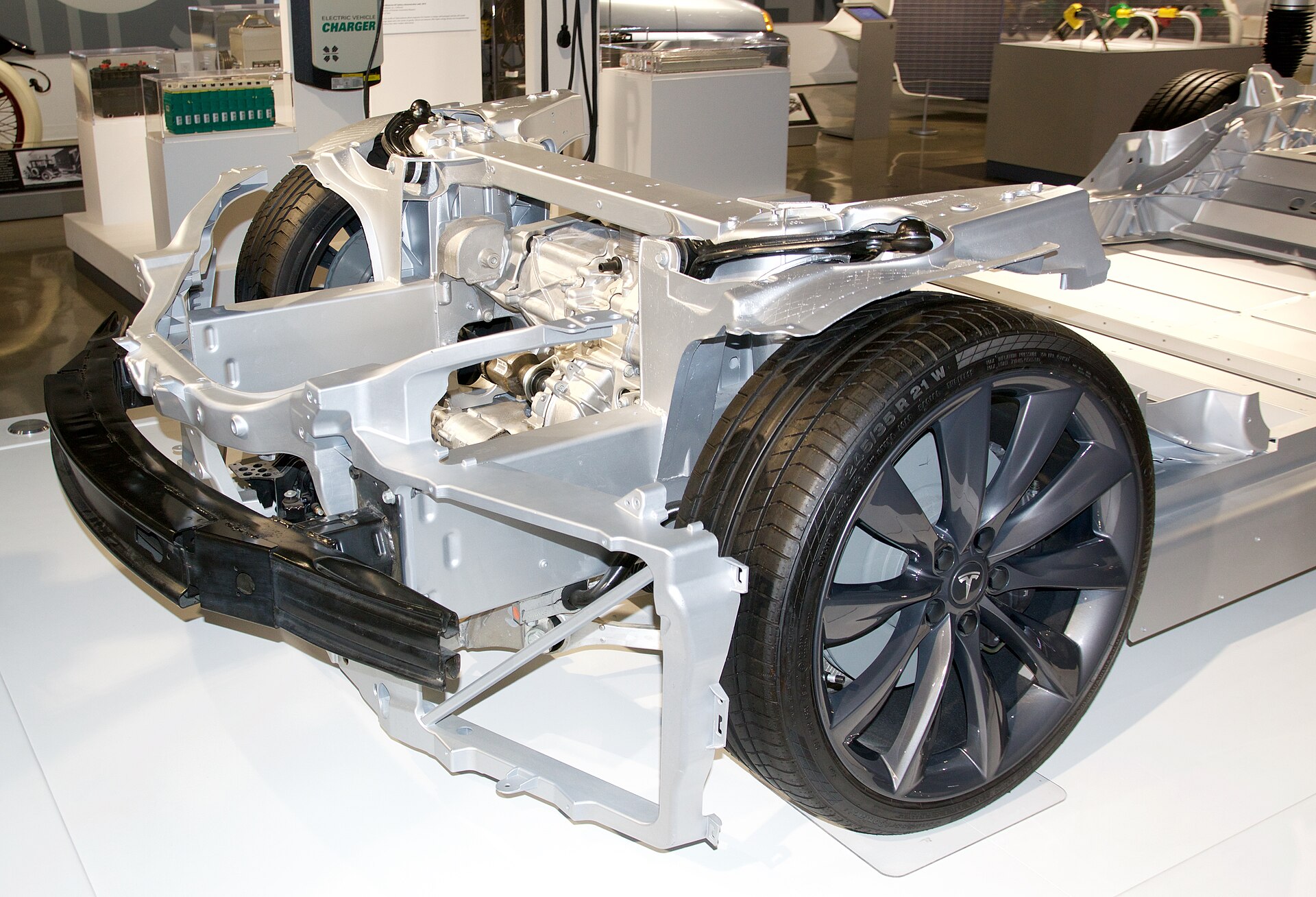
Yes. The original rear large drive unit on many rear-wheel-drive and Performance Model S and X cars is known for coolant leaking past the rotor seal into the motor. Depending on how far it has gone, the fix ranges from a coolant delete and new bearings to a full rebuild. Published ranges for a remanufactured large drive unit at an independent shop run about $3,000 to $5,500, versus about $5,500 to $8,000 for a new one from the dealer.
It usually means the battery management system (BMS) found a problem with one or more modules and limited charging to protect the pack. It's common on older 85 and 90 kWh packs, and it doesn't always mean the whole pack is dead. A module-level diagnostic shows which part is causing it.
It means the car detected high voltage leaking to the chassis somewhere. On older Model S and X cars a common cause is coolant getting into the large drive unit. Other causes include a damaged high-voltage cable or component, or moisture in the pack. These alerts can stop the car, so it's best to have it trailered rather than driven.
If the car is still under Tesla's warranty, you should. Out of warranty, Tesla typically replaces the whole battery pack or drive unit as one assembly. Public pricing puts an out-of-warranty Model S pack at about $20,000 to $22,000 (Recurrent). An independent shop can test the pack at the module level and repair only the part that failed.
Yes, but older Model S and X are our main focus. On 3 and Y we handle battery diagnostics, contactor and pyro fuse faults, coolant leaks, drive unit problems, and BMS errors. Pack repair options on 3 and Y are more limited, especially structural packs, and we'll tell you what makes sense.
Drive it slowly in a parking lot and listen for a grinding or rumble from the rear around 3 to 5 mph, which can point to a coolant-damaged drive unit. Ask whether the rear drive unit has been replaced or had a coolant delete. Look at the inside edges of the rear tires. Ask if the car sags after sitting, or check the air struts for rust. Pull up the service alerts in service mode and photograph them. If you can, have the battery pack pressure-tested, because water getting in is a common cause of pack failure. None of these alone is a reason to walk away, but they tell you what the car will need.
Two things usually stop it: the electric parking brake stays set, and the air suspension is flat. The parking brake calipers can be released with a 12V source at the right connector pins, and the suspension can be raised by feeding air straight to the valve block. Both need some care, so call us before the carrier arrives and we'll walk you or the driver through it.
Yes, and a good used or remanufactured pack can get a car back on the road for a lot less than a new one. After the swap the pack has to be synced to the car with Tesla's service software. A pack that's been sitting in storage should be tested first. Installation needs care too: the pack has to go up level on guide pins and seat fully, or high-voltage and low-voltage connectors get broken or don't make contact.
More range and much faster Supercharging. On one Model X we upgraded, the car showed 345 miles of range afterward. At a Supercharger in 2°F weather it peaked around 170 kW and added about 200 miles in roughly 30 minutes. Results vary by car, and older cars need the right high-voltage adapter for the newer pack.
Done right, it only blocks coolant from the rotor, which is the path the leaky seal sits on. Coolant still flows to the stator, inverter, and gearbox through the flyover tube, which must stay in place, or the motor gets hot spots. Tesla's own later drive unit revision takes a similar approach. Owners have put a lot of miles on deleted units, but long-term data is still coming in, so we'll talk through the trade-offs for your car.
Usually not. Most leaks on older cars come from rust pushing the strut's lower O-ring out of place, not from a failed air bag or shock. Cleaning the corrosion and fitting new O-rings fixes most of them. We pressure-test the strut and check every line and fitting afterward so it stays up.
We think so. A lot of owners skip it, but when a drive unit is out or being serviced, we give it a full coolant flush. Gear oil we suggest changing about every 50,000 miles on unfiltered units. Old fluid is cheap to replace and expensive to ignore.
It depends on the diagnosis and parts. We give you a time estimate with your written quote, before any work starts. Transport time each way depends on the carrier and the distance.
Fill out the free quote form with your model, year, battery size, ZIP code, and what's going on. Photos of the alerts on the screen or a copy of any Tesla estimate help a lot. We'll reply by text or email.
They need less than a gas car, but not none. Drive unit gear oil, brake calipers that rust from light use, coolant, the 12V battery, and the battery fuse cover on older packs all need attention as the car ages. Keeping up with them is a big part of keeping an older Model S or X on the road.
Not necessarily. With battery and drive unit work along the way, some Model S cars have passed 700,000 miles. The body, interior and chassis usually outlast the original pack and drive unit, which is why repairing those parts makes sense.
Plenty of routine work on these cars is DIY-friendly, like the 12V battery, cabin filters, and brake caliper cleaning, and Tesla publishes service information online. High-voltage work on the pack and drive unit is different. It can kill, and it should be left to trained techs.
It can. If the car sits on flat air suspension, it may be too low to winch onto a trailer. If you can get the 12V system powered, air the suspension up to its highest setting before loading. Tell the carrier the car is inoperable so they bring a winch, and ask us if you're not sure how to prep it.
Ask us. It depends on the car and on Tesla's account policies, which can change. We'll tell you what we know for your specific car before any work starts, but we can't promise how Tesla will treat it.
Tell us your model, year, battery size, where the car is, and what the screen or the dealer is telling you. A photo of the alert or a copy of the Tesla estimate helps us give you a faster, more accurate answer.
We reply by text or email, usually within one business day. No obligation.
Newer car? Check your Tesla battery and drive unit warranty first. Warranty work should go to Tesla.